Story Details Back to all story
The Evolution of Intelligent UAV Technology: How Advanced Drone Systems Are Reshaping Industrial Operations
| Story | Date | The Evolution of Intelligent UAV Technology: How Advanced Drone Systems Are Reshaping Industrial Operations
Technology continues to change the way businesses collect information, manage equipment, and perform complex operations. Among the most significant developments in modern engineering is the advancement of unmanned aerial vehicles (UAVs). These aircraft have evolved from relatively simple remote-controlled devices into sophisticated platforms equipped with advanced imaging systems, navigation technology, communication equipment, and specialized sensors. Today, professional UAV systems are used in various industries where accurate information, operational flexibility, and access to challenging locations are important. From inspecting large industrial facilities to monitoring environmental conditions and producing geographical data, modern aerial technology provides practical solutions for organizations with different technical requirements. As demand for specialized equipment increases, manufacturers are focusing on developing integrated systems that combine reliable aircraft platforms with high-performance electronic components. Understanding these technologies helps businesses identify suitable equipment and make better decisions when investing in professional aerial solutions.
Understanding the Development of Professional UAV Systems
The development of unmanned aviation has introduced new possibilities for industrial and commercial activities. Traditional inspection methods sometimes require specialized vehicles, elevated platforms, or teams working in difficult environments. UAV technology provides another approach by allowing operators to collect information from the air using carefully selected cameras and sensors. Modern aircraft can be configured for different operational purposes. Some platforms prioritize flight endurance, while others are designed around payload capacity, maneuverability, or specialized equipment integration. This flexibility makes UAV systems useful for infrastructure inspection, surveying, environmental observation, and technical research. However, the effectiveness of an aerial system depends on more than the aircraft itself. Navigation accuracy, communication reliability, sensor performance, propulsion, and equipment compatibility all contribute to the overall capabilities of a professional UAV configuration.
Advanced Components That Make Modern Aerial Systems More Capable
Reliable UAV Platforms and Aircraft ConfigurationThe aircraft platform serves as the central structure of an unmanned aerial system. Its design determines important characteristics such as payload capacity, flight stability, maneuverability, and operating endurance. Selecting an appropriate platform requires an understanding of the intended application and the equipment that must be carried during operations. For example, an aircraft used for geographical surveying may require a configuration that supports stable flight and accurate positioning. Industrial inspection applications may place greater emphasis on camera integration, operational flexibility, and the ability to access specific structures. Manufacturers must consider structural design, propulsion requirements, electrical systems, and payload compatibility when developing platforms for professional users. EO/IR Gimbal Cameras for Advanced Visual InformationCamera technology plays a major role in professional aerial operations. Electro-optical cameras capture visible-light images, providing useful details about structures, landscapes, equipment, and surrounding environments. Infrared imaging introduces another capability by identifying temperature differences that may not be visible through ordinary photography. EO/IR gimbal cameras combine imaging equipment with stabilization mechanisms. This arrangement helps minimize unwanted camera movement during flight and supports clearer observation. Operators can use these systems for different inspection and monitoring activities depending on the available specifications.
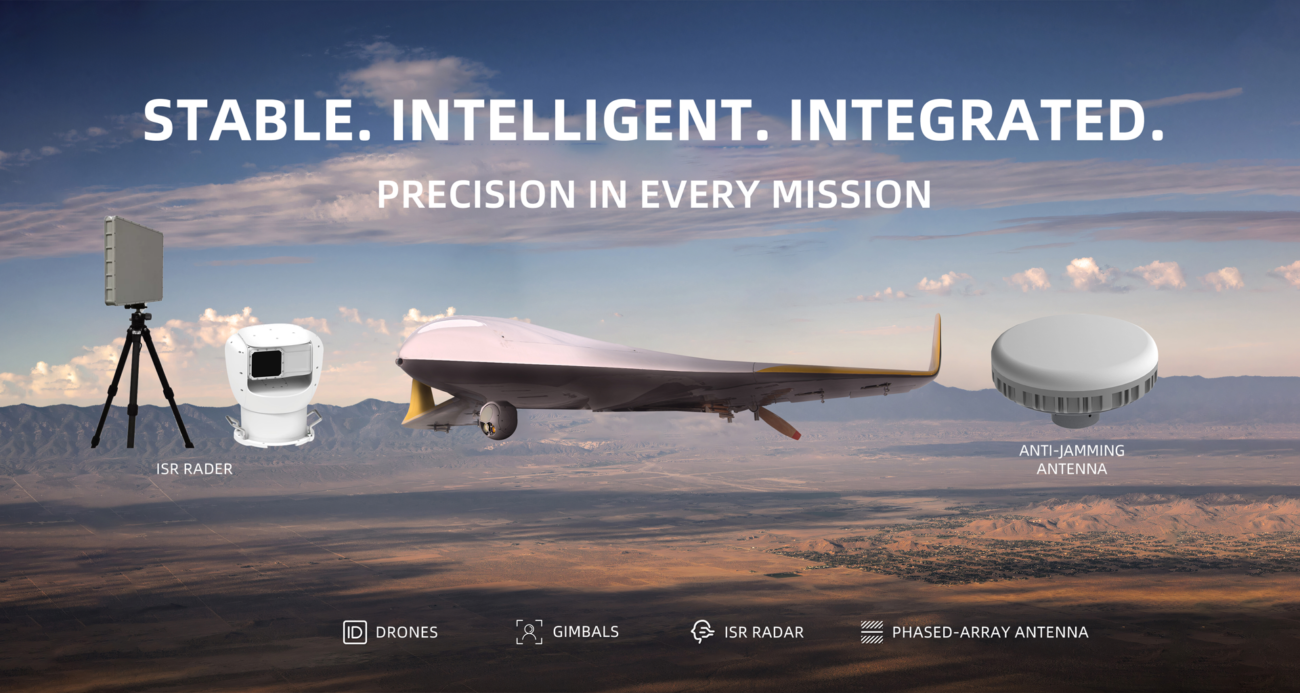
Organizations exploring professional aerial equipment can review the technologies offered by MoneyPro UAV Manufacturer. Its product range covers UAV platforms, EO/IR gimbal cameras, radar systems, communication equipment, and specialized sensing modules designed for professional applications.
Communication and Navigation Technologies in Modern UAV Operations
Mesh Radio Systems for Flexible CommunicationCommunication technology is essential for coordinating unmanned aircraft and exchanging information between connected equipment. Mesh radio systems use interconnected network devices that can relay information through participating nodes. This structure can be useful in environments where maintaining communication through a single connection is challenging. For professional UAV applications, communication equipment should be selected according to the operational environment, network requirements, transmission characteristics, and aircraft compatibility. Proper integration helps operators coordinate equipment and maintain effective information exchange throughout an operation. GNSS Antennas and Positioning TechnologyGlobal Navigation Satellite System technology supports geographical positioning by receiving signals from navigation satellites. It is particularly important for applications involving surveying, mapping, route planning, and location-based observations. GNSS antennas are responsible for receiving satellite signals, making their design and installation important considerations. Factors such as antenna placement, surrounding obstacles, signal conditions, and equipment compatibility can influence positioning performance. When integrated correctly, suitable navigation equipment helps support more consistent aerial operations and organized geographical data collection. Radar Systems for Specialized ApplicationsRadar technology provides additional sensing capabilities that can support detection and measurement tasks. Depending on the system configuration, radar equipment can help collect information about objects and surrounding conditions. Integrating radar into an aircraft requires attention to payload capacity, electrical requirements, mounting arrangements, and communication interfaces. These considerations help ensure that the equipment is suitable for the intended application and operates appropriately alongside other onboard components.
Propulsion Engineering and Specialized Sensing Equipment
Turbojet Engines for Advanced Aircraft ApplicationsPropulsion technology is one of the most important elements of aircraft engineering. Different UAV designs require different propulsion solutions depending on their intended operating conditions, aircraft structure, performance requirements, and payload configuration. Turbojet engines serve specialized aerial applications where their particular thrust characteristics are appropriate. Their integration involves several engineering considerations, including fuel systems, thermal management, engine specifications, aircraft structure, and operational safety. Careful coordination between propulsion components and aircraft design is necessary to develop a suitable overall configuration. Infrared Thermal Sensors for Industrial MonitoringInfrared thermal sensing allows operators to observe temperature variations across different surfaces and equipment. This capability can be useful in industrial environments where thermal information supports inspection, monitoring, and maintenance activities. When installed on a suitable aerial platform, thermal sensors can help examine locations that may be difficult to access through conventional inspection methods. The collected information can then be evaluated to identify temperature patterns and areas requiring additional attention. Laser Sensing for Measurement and MappingLaser-based technologies provide specialized measurement capabilities, including distance and ranging information. Depending on the equipment design, these systems can contribute to surveying, geographical data collection, and technical assessment activities. Combining laser sensing with suitable navigation equipment and data-processing tools can improve the usefulness of collected aerial information. The specific results depend on sensor specifications, environmental conditions, installation quality, and processing methods.
How Professional UAV Systems Are Selected and Used
Choosing an appropriate aerial system begins with identifying the purpose of the operation. Businesses should consider what information they need, where the aircraft will operate, and which equipment is necessary to complete the task. 1. Evaluate the ApplicationThe first step is to define the operational objective. Industrial inspection, environmental monitoring, and geographical mapping have different equipment requirements. Understanding these differences helps establish the necessary aircraft characteristics and sensor capabilities. 2. Choose Suitable Aircraft and SensorsOnce the application is clear, operators can evaluate available UAV platforms and supporting modules. Cameras, radar systems, thermal sensors, GNSS antennas, and communication equipment should be selected according to their specifications and compatibility with the aircraft. 3. Integrate and Inspect the EquipmentBefore operation, the selected components must be installed and checked according to their technical requirements. Mechanical connections, electrical interfaces, payload limitations, communication functions, and navigation equipment should receive appropriate attention. 4. Conduct the Operation and Process DataAfter completing the necessary preparation, trained operators can conduct the mission while following applicable aviation regulations and safety procedures. Collected images and sensor readings can subsequently be transferred to suitable processing systems for analysis and reporting.
Practical Benefits of Advanced Unmanned Aerial Technology
Modern UAV systems offer several advantages for professional organizations when the equipment is selected and configured correctly.
Why Businesses Consider Specialized UAV Manufacturers
Choosing a suitable manufacturer is an important part of developing an effective unmanned aerial solution. Businesses should consider the available product range, technical specifications, component compatibility, engineering capabilities, and suitability for their intended applications. A manufacturer offering several categories of aerial equipment can make it easier for customers to explore different configurations. Instead of evaluating aircraft platforms and individual electronic components separately, organizations can investigate how various technologies may work together within a complete system. MoneyPro specializes in unmanned aerial systems and advanced sensor technologies, covering UAV platforms, EO/IR gimbal cameras, radar systems, mesh radio communication, turbojet engines, GNSS antennas, infrared thermal and laser sensing, and other high-performance modules. This range of technologies addresses different professional requirements, including industrial inspection, environmental monitoring, mapping, and other specialized aerial applications. For international customers, having access to multiple equipment categories provides an opportunity to explore configurations that better match their technical objectives.
Building the Next Generation of Professional Aerial Solutions
Unmanned aerial technology continues to develop through improvements in aircraft engineering, imaging equipment, communication systems, navigation, propulsion, and specialized sensing. These advancements are creating new opportunities for organizations that depend on accurate information and flexible inspection methods. The most effective solution is not necessarily the aircraft with the largest number of features. It is the configuration that combines appropriate hardware, compatible components, reliable operation, and the sensing capabilities required for a particular task. Careful equipment selection and proper integration remain essential for achieving useful results. For businesses looking to explore modern unmanned aviation and advanced sensor equipment, MoneyPro provides a range of professional technologies covering multiple aspects of aerial system development. Visit the official website to discover its UAV platforms, imaging systems, radar equipment, communication modules, propulsion technologies, and specialized sensors. With a focus on professional aerial applications and advanced engineering solutions, MoneyPro is a valuable destination for organizations seeking capable equipment for their next UAV project. |
2026-11-09 04:36:32 |
|---|