Story Details Back to all story
Turning Complex Circuit Designs into Reliable Products: A Complete Guide to PCB Manufacturing and Assembly
| Story | Date | Turning Complex Circuit Designs into Reliable Products: A Complete Guide to PCB Manufacturing and AssemblyBringing an electronic product to life requires careful planning, technical knowledge, and a manufacturing process that connects multiple stages of development. Before a device reaches its intended users, its circuit board must be fabricated, electronic components must be sourced, and the assembly must be inspected to ensure that everything works according to the original design. These activities are closely connected, and the quality of each stage can influence the final result. For electronics companies, startups, and product developers, finding a manufacturing partner capable of supporting different production requirements can simplify this journey. Instead of coordinating separate suppliers for every task, businesses can work with a provider offering fabrication, assembly, procurement, testing, and integration services. A dependable 365 PCB Supplier can help connect engineering documentation with practical manufacturing solutions, supporting projects from early prototypes to completed electronic products. Why a Well-Planned PCB Manufacturing Process MattersA printed circuit board is one of the most important elements in an electronic device. It provides the structure for mounting components and establishes the electrical pathways that allow different parts of a system to communicate. Whether used in household equipment, industrial controls, communication devices, or specialized electronics, the board must follow the requirements of its application. Manufacturing a reliable PCB involves several technical decisions. Engineers and production teams need to consider the board's dimensions, number of layers, copper thickness, material properties, drilling specifications, and surface finish. These details influence how the board can be manufactured and assembled. Careful preparation also helps prevent problems during later production stages. When manufacturing files are complete and technical requirements are clearly documented, suppliers can better understand the project and organize the necessary production activities. Custom PCB Fabrication for Specialized DesignsNot every electronic product can use a standard circuit board. Different applications have different space limitations, electrical requirements, and mechanical considerations. Custom PCB fabrication makes it possible to manufacture boards according to the specific needs of an individual project. Board Configurations and MaterialsSingle-sided, double-sided, and multilayer circuit boards serve different purposes. Simpler designs may require fewer conductive layers, while more advanced electronic systems can benefit from multilayer construction that accommodates complex routing within a limited space. Material selection is another important consideration. The appropriate substrate and copper specifications depend on the electrical, mechanical, and environmental requirements of the application. Precision in Circuit Board ProductionManufacturing accuracy is important for maintaining the intended circuit layout. Drilling positions, conductor spacing, board dimensions, and surface characteristics must follow the approved design specifications. Proper attention to these details creates a suitable foundation for subsequent component assembly. Understanding SMT, THT, and Fine-Pitch AssemblyAfter fabrication, the next stage involves installing electronic components onto the circuit board. The selected assembly technology depends on component design, board layout, production requirements, and the intended operating conditions of the final product. SMT for Compact Electronic AssembliesSurface Mount Technology places components directly onto the surface of a PCB. It is widely used in modern electronics because it supports compact layouts and allows many components to be installed efficiently. SMT is particularly suitable for products where space optimization and component density are important. THT for Specific Component RequirementsThrough-Hole Technology involves inserting component leads through drilled holes in the circuit board and soldering them into position. This method remains useful for components that require particular mechanical support or connection characteristics. Fine-Pitch Assembly for Smaller ConnectionsFine-pitch components have closely spaced terminals, requiring accurate positioning and carefully controlled soldering. Manufacturing teams must pay particular attention to placement precision because small errors can create unwanted electrical connections or assembly defects. Having access to different assembly methods makes it possible to accommodate a wider variety of circuit designs and component packages. Component Sourcing and BOM Management for Production ReadinessElectronic components are essential to every assembled circuit board. Even when a design is technically complete, production cannot proceed as planned without the correct materials. Component sourcing helps businesses obtain the parts required for their manufacturing orders while coordinating procurement with production schedules. The Bill of Materials, or BOM, serves as an important reference throughout this process. It identifies the components required for an assembly and normally includes part numbers, descriptions, quantities, and relevant specifications. Keeping Component Information OrganizedAccurate BOM documentation makes it easier to identify the required parts and verify that purchased components match the engineering design. This is especially important for projects involving numerous electronic components with similar package types or specifications. Supporting Procurement PlanningComponent availability can influence manufacturing schedules. Coordinating sourcing activities with fabrication and assembly requirements helps businesses plan production more effectively and identify potential material-related challenges earlier. How Turnkey PCBA Takes a Project from Files to AssemblyTurnkey PCBA combines important manufacturing activities into a coordinated service. Depending on the project, this can cover circuit board fabrication, component sourcing, assembly, and testing. It provides a practical option for businesses that prefer to manage several production requirements through one manufacturing arrangement. The process generally begins when the customer submits the technical files needed for manufacturing. These may include Gerber files, drill data, component placement information, assembly drawings, and the BOM. After reviewing the documentation, the manufacturing team can organize the production requirements and proceed through the relevant stages. 1. Manufacturing Documentation ReviewThe supplied files are evaluated to understand the board structure, component requirements, and assembly specifications. 2. PCB FabricationThe bare board is manufactured according to the approved dimensions, materials, layer configuration, and finishing requirements. 3. Component SourcingRequired electronic parts are procured according to the BOM and coordinated with the production schedule. 4. Assembly and SolderingComponents are installed using suitable SMT, THT, or fine-pitch processes based on the design. 5. Inspection and EvaluationThe assembled circuit board undergoes appropriate inspection and testing to evaluate its manufacturing quality and intended functionality. 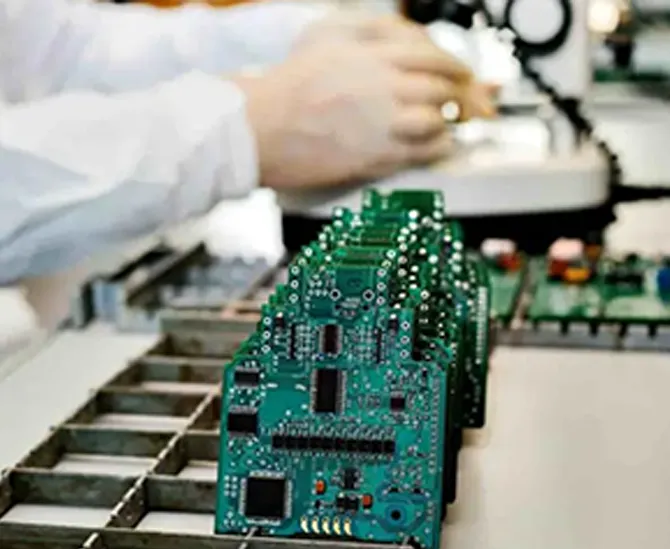
Quality Control Through Inspection and Functional TestingQuality management is an essential consideration when manufacturing electronic assemblies. A board may appear complete but still contain defects that affect its electrical performance. Inspection and testing provide opportunities to identify these problems before the product moves into later manufacturing stages. Visual inspection can help detect incorrectly positioned components, damaged parts, and visible soldering inconsistencies. Automated optical inspection can also examine component placement and solder joint characteristics according to established criteria. Electrical TestingElectrical checks can help identify issues such as unintended connections, open circuits, and other problems within the assembled board. The testing approach depends on the design and the electrical requirements of the product. Functional TestingFunctional evaluation examines whether an electronic assembly performs the operations it was designed to support. Testing procedures may involve applying power, checking outputs, examining communication interfaces, and verifying specific product functions. Combining suitable inspection and testing methods provides a more complete evaluation than relying on visual checks alone. Prototype Development and the Transition to ProductionBefore investing in larger manufacturing quantities, businesses often need to verify that their electronic designs work as expected. Prototype production provides an opportunity to evaluate a physical version of the circuit board and identify areas that may require improvement. Engineers can use prototype assemblies to examine component compatibility, board dimensions, soldering quality, and electrical behavior. If adjustments are necessary, the design can be updated before the next manufacturing stage. After successful evaluation, the project can move toward larger production requirements. This transition involves maintaining consistent specifications, organizing component availability, and establishing appropriate manufacturing procedures. Support across prototype and production stages is valuable because it helps businesses maintain continuity as their projects develop. It can also reduce the effort involved in transferring technical information between different manufacturing providers. Box Build Services for More Complete Electronic ProductsSome projects require more than an assembled circuit board. Electronic products may also need enclosures, wiring, connectors, mechanical components, and additional modules before they are ready for their intended application. Box build services address these requirements by integrating electronic assemblies into a larger product structure. Depending on the project, this may include installing PCBs into housings, connecting cables, arranging internal components, and completing mechanical assembly. Product integration requires coordination between electronic and mechanical specifications. The board must fit correctly within the enclosure, connectors must remain accessible, and internal connections must follow the intended design. For businesses seeking complete electronic assemblies, these services provide a useful extension beyond traditional PCB manufacturing. What Businesses Should Look for in a PCB SupplierSelecting a manufacturing partner requires evaluating the supplier's capabilities in relation to the actual needs of a project. Price is one consideration, but technical compatibility, communication, production flexibility, and quality procedures are equally important. Comprehensive Manufacturing CapabilitiesA provider offering fabrication, component sourcing, SMT and THT assembly, testing, and box build can support several connected production requirements. Clear Project CommunicationManufacturers should be able to understand technical documentation and communicate relevant production requirements. Clear discussions about specifications, quantities, and expected deliverables help establish realistic project expectations. Flexible Production SupportBusinesses may need a small prototype order today and a larger manufacturing run later. Support for different production stages can make it easier to coordinate changing project requirements. Appropriate Quality ProceduresInspection and testing capabilities should match the complexity and intended application of the electronic product. Understanding the available evaluation methods helps businesses select services that meet their requirements. How 365PCB Supports Different Electronics Manufacturing Needs365PCB provides manufacturing services covering several important stages of electronic product development. Its capabilities include custom PCB fabrication, turnkey PCBA, SMT and THT assembly, fine-pitch component placement, component and BOM sourcing, inspection, functional testing, and box build. This service combination supports businesses that want to coordinate multiple manufacturing activities through one provider. Rather than focusing only on producing bare circuit boards, the company also addresses the assembly, testing, and integration requirements involved in developing finished electronic products. Its prototype-to-production support is particularly relevant to companies developing new devices or preparing established designs for manufacturing. Businesses can organize their requirements around the project's current development stage while considering the capabilities needed for future production. Customers can begin by preparing their Gerber files, BOM, assembly documentation, board specifications, and expected production quantities. Providing complete technical information helps establish a clearer understanding of the manufacturing requirements. Take the Next Step Toward Efficient Electronics ManufacturingSuccessful electronic product development depends on more than a good circuit design. Custom fabrication, accurate component sourcing, suitable assembly technology, quality inspection, functional testing, and final integration all contribute to producing dependable electronic assemblies. Working with a manufacturing provider that understands these connected requirements can simplify production coordination and support projects as they progress from prototypes to larger manufacturing quantities. The ability to access multiple services through one production workflow also gives businesses a practical way to manage different technical requirements. Explore the capabilities of 365PCB and discover how a professional 365 PCB Supplier can help turn your engineering documentation into assembled electronic products. From custom circuit board fabrication and turnkey PCBA to component sourcing, inspection, and box build, 365PCB offers manufacturing support for businesses ready to move their electronics projects forward. |
2026-11-09 04:29:25 |
|---|