Story Details Back to all story
Logistics Software Development Company | Custom Logistics Software | DreamzTech
| Story | Date | Transforming Supply Chain Operations with Modern Logistics Technology
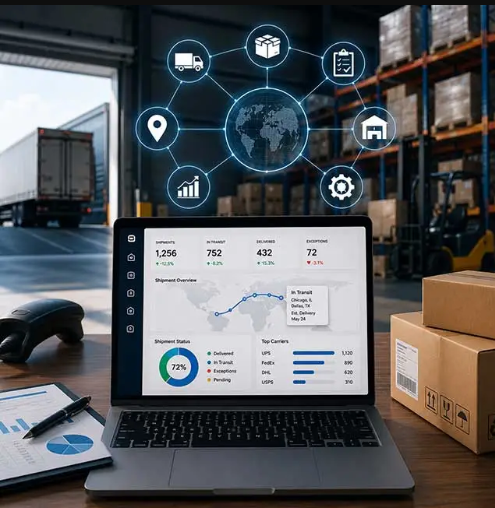
Modern supply chains face unprecedented challenges in managing complex global operations, rising transport costs, and demanding customer expectations. Traditional off-the-shelf management platforms often fall short when businesses attempt to scale or tailor their operations custom logistics software development company unique operational rules. Partnering with a specialized team offers organizations the agility, security, and precision needed to transform end-to-end supply chain processes without paying recurring per-user or per-shipment fees. The Advantages of Custom Logistics Systems over Off-the-Shelf SaaSMany logistics enterprises start with subscription-based software products designed for the generic business model. While these platforms allow for rapid initial setup, they frequently introduce rigid operational constraints over time. Businesses end up modifying their internal workflows to match the limitations of the software rather than forcing the software to serve their operational goals. By choosing custom logistics software development services, companies build applications structured around their specific business rules, rating engines, slotting rules, and carrier relationships. Full ownership of the underlying IP means zero vendor lock-in, eliminated seat license fees, and complete freedom to expand the platform whenever market demands shift. Key Capabilities of Enterprise Logistics PlatformsA modern enterprise supply chain software environment unifies multiple operational verticals into a single source of truth. By leveraging modular architectures, software development teams can deploy comprehensive capabilities across several core areas. Transportation Management Systems (TMS)Comprehensive freight management platforms streamline order intake, automated load planning, carrier ranking, real-time tracking, and settlement. An intelligent rating engine evaluates carriers across cost, on-time delivery metrics, and capacity in real time, driving efficiency for every single load. Warehouse Management Systems (WMS)Cloud-based warehouse solutions enable continuous inventory visibility across multiple distribution centers. Integrating barcode and RFID tracking technologies simplifies receiving, putaway, picking, and cycle counting operations while reducing physical audit times.
Multi-Carrier Shipping & Rating EnginesConnecting to dozens of parcel, LTL, and FTL carriers simultaneously enables instant rate shopping, automated customs and shipping label generation, and unified tracking status pages for end customers. Fleet & Telematics PlatformsIntegrating vehicle sensors, GPS devices, and mobile apps provides real-time visibility into driver activities, fuel efficiency, hours-of-service compliance, and predictive maintenance schedules. Accelerating Time to Market with AI-First ArchitecturesHistorically, building enterprise-grade supply chain platforms required long development lifecycles that could extend beyond two years. Today, modern engineering methodologies utilize pre-built, field-tested components alongside intelligent AI frameworks to deploy operational software within 12 to 16 weeks. Artificial intelligence modules add immediate value across the system by offering predictive ETAs, LLM-based document processing for bill of lading extraction, dynamic route optimization, and spend anomaly detection. Connecting these applications via open APIs and EDI standards ensures effortless data flow between ERPs such as SAP or NetSuite, existing WMS instances, and external carrier networks. ConclusionUpgrading to tailored enterprise software allows logistics operators, fleet managers, and supply chain leaders to overcome the constraints of legacy SaaS platforms. By deploying customized TMS, logistics software development company , and multi-carrier shipping solutions, companies retain total ownership of their source code, eliminate recurring seat fees, and establish a scalable foundation for future operational growth. Leveraging scalable technology and embedded AI features ensures that modern supply chain operations run efficiently, transparently, and cost-effectively. |
2026-09-19 12:06:31 |
|---|