In semiconductor production, a chemical distribution system should do greater than transportation chemicals from storage to the factor of usage. It needs to keep ultra-high pureness, provide consistent flow and pressure, protect workers and devices, and remain readily available with minimal disruption. As semiconductor processes come to be progressively sensitive to contamination and procedure variant, high uptime ends up being a fundamental layout objective for UHP chemical delivery systems.
A high-uptime system combines equipment redundancy, continuous tracking, automation, efficient isolation, precautionary upkeep, and thoroughly selected parts. These components collaborate to lower unplanned downtime while keeping reputable chemical distribution throughout demanding manufacturing operations.
Redundancy for Continuous Chemical Schedule
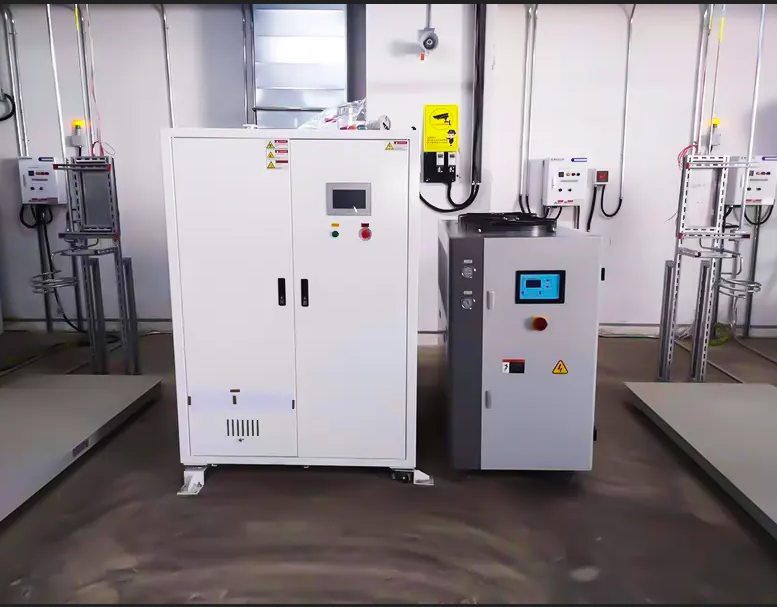
Redundancy is among one of the most crucial concepts in designing a high-availability UHP chemical delivery system. Essential components such as pumps, valves, sensing units, power products, and control elements can be configured with backup capacity to make sure that a single part failing does not necessarily stop manufacturing.
As an example, redundant pumping setups can permit a standby pump to take control of when the main pump calls for upkeep. Redundant instrumentation can supply an additional measurement source if a sensor fails. The ideal level of redundancy depends on chemical attributes, procedure demands, production ability, and the repercussions of devices failing.
Redundancy ought to also reach vital utilities and control framework where useful. Back-up power, trusted interaction networks, and fault-tolerant control architecture can assist protect against fairly small tools troubles from becoming production-wide disturbances.
Surveillance and Automation for Very Early Issue Detection
Continuous tracking permits operators to recognize unusual problems before they turn into significant failures. A contemporary UHP chemical delivery system can monitor parameters such as stress, flow rate, fluid level, temperature level, valve standing, and leak conditions.
Automated alarms can notify drivers when dimensions move outside predefined operating restrictions. Advanced systems can use programmable logic controllers and supervisory control systems to review numerous specifications simultaneously and launch predefined feedbacks.
Automation can also enhance repeatability. Rather than relying greatly on manual shutoff operation or chemical transfer procedures, automated sequences can control loading, transfer, flushing, seclusion, and other operations according to recognized procedure reasoning. This decreases operator variability while improving procedure consistency and traceability. To know more at https://www.chengweisemi.com/product/ .
Isolation Style for Safer Upkeep
Effective UHP Chemical Dedelivery Cabinet seclusion is crucial for maintaining uptime because upkeep activities ought to not unnecessarily interfere with the whole chemical distribution network. Valve manifolds, isolation valves, and dedicated process sections can enable professionals to separate individual parts or branches while various other components of the system continue running.
A properly designed isolation method need to take into consideration both security and functional continuity. Maintenance personnel require clear ways of dividing devices from chemical sources prior to examination or replacement. At the same time, the system ought to be set up to ensure that planned upkeep can be performed without triggering avoidable interruptions to unassociated manufacturing devices.
Correct seclusion also sustains troubleshooting. When stress, flow, or leak irregularities occur, specific areas can be separated to help determine the damaged part or piping sector extra efficiently.

Precautionary Maintenance and Condition-Based Strategies
High uptime can not depend solely on reacting to failures after they take place. Precautionary maintenance helps recognize wear, destruction, and performance changes before they lead to unanticipated downtime.
Maintenance routines can include inspection and replacement of seals, valves, filters, pumps, sensing units, and other vital components according to maker suggestions and operating problems. Condition-based upkeep can provide additional benefits by making use of system data to identify establishing issues.
Progressive changes in pump efficiency, pressure security, circulation characteristics, or valve feedback may indicate that a component needs interest. Integrating operational data with maintenance documents can help engineering teams identify suitable solution intervals and focus on vital tools.
Trusted Element Option and Material Compatibility
Element selection directly influences both purity and system integrity. Products that call the chemical must work with the details chemical being supplied and with the needed pureness degree. In many UHP applications, electropolished 316L stainless-steel piping and suitably defined wetted elements are used to support requiring contamination-control needs.
Valves, fittings, regulators, pumps, filters, tubing, sensing units, and seals should be chosen according to chemical compatibility, pressure and temperature demands, leakage performance, tidiness, and anticipated life span. Components ought to likewise have ideal surface coatings and producing controls for the designated UHP application.
Standardizing components where useful can streamline spare-parts monitoring and specialist training. Standardization should never override chemical compatibility or process-specific requirements.
Verdict

Designing a high-uptime UHP chemical distribution system needs a systems-level strategy. Redundancy reduces the influence of specific failures, monitoring offers early presence right into unusual problems, automation boosts uniformity, seclusion makes it possible for safer maintenance, and preventive approaches help in reducing unforeseen disturbances. At the very same time, dependable and chemically compatible components give the structure for lasting system performance.
By integrating these principles from the initial design stage, semiconductor facilities can develop UHP chemical shipment facilities that sustains purity, safety, functional continuity, and dependable point-of-use chemical supply.
|
2026-08-21 06:22:18 |